
Unlocking the Power of Lion's Mane: A Natural Ally Against Neuroinflammation and Cognitive Decline in Alzheimer's and Dementia
Unlocking the Power of Lion's Mane: A Natural Ally Against Neuroinflammation and Cognitive Decline in Alzheimer's and Dementia
In the quest for natural remedies to support brain health, Lion's Mane mushroom (Hericium erinaceus) has emerged as a fascinating contender. This edible fungus, resembling a cascading white mane, has been used in traditional Asian medicine for centuries to promote overall vitality. Today, modern science is uncovering its potential benefits, particularly in combating neuroinflammation and enhancing cognition—key factors in addressing neurodegenerative conditions like Alzheimer's disease and dementia. While research is still evolving, promising studies suggest Lion's Mane could play a role in slowing cognitive decline and protecting the brain. In this blog post, we'll dive into the evidence, exploring its mechanisms, benefits, and limitations.
What is Lion's Mane Mushroom?
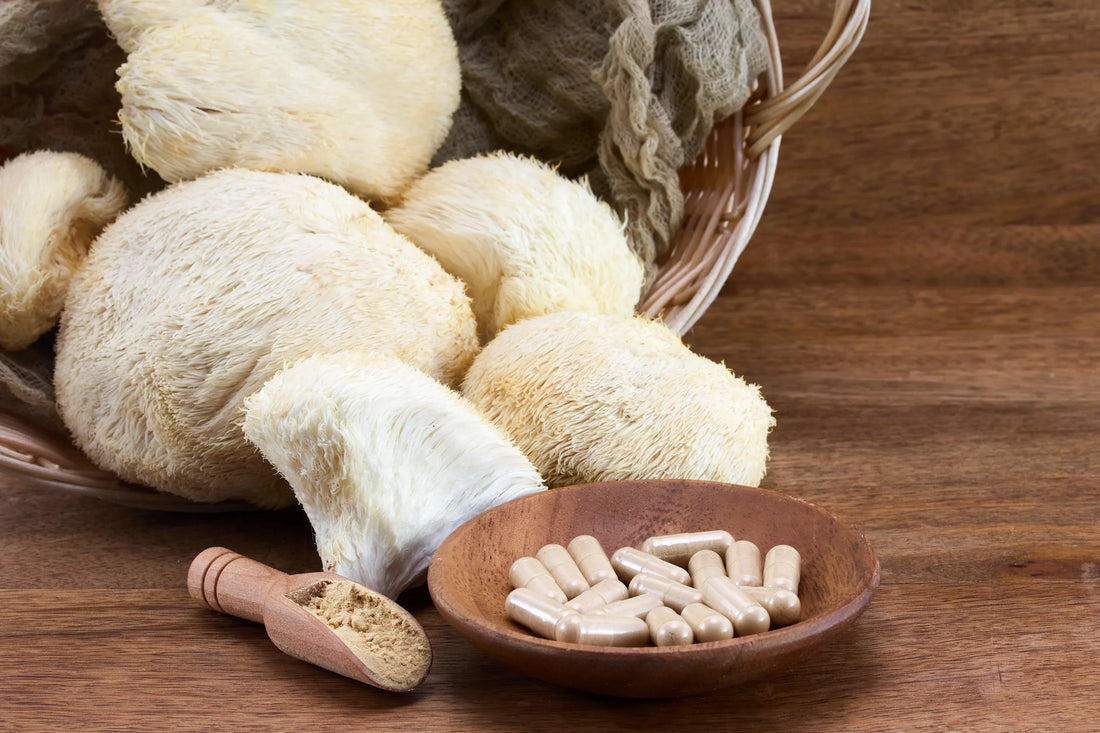
Lion's Mane, also known as the "monkey head mushroom," is a type of medicinal mushroom native to North America, Europe, and Asia. It grows on hardwood trees and is prized for its unique texture and mild seafood-like flavor, making it a popular culinary ingredient. Beyond the kitchen, its bioactive compounds—such as hericenones from the fruiting body and erinacines from the mycelium—are the stars of scientific interest. These compounds are believed to stimulate nerve growth factor (NGF), a protein essential for the growth, maintenance, and survival of neurons.
The Science: How Lion's Mane Supports Brain Health
At the heart of Lion's Mane's potential lies its ability to promote neurogenesis (the formation of new neurons) and reduce neuroinflammation, which is chronic inflammation in the brain that contributes to cognitive impairment. Neuroinflammation is a hallmark of conditions like Alzheimer's, where it exacerbates the buildup of amyloid plaques and tau tangles, leading to neuron damage and memory loss.
Studies indicate that Lion's Mane extracts can increase NGF synthesis, fostering neurite outgrowth and enhancing synaptic plasticity—the brain's ability to form new connections. Additionally, its antioxidant and anti-inflammatory properties help mitigate oxidative stress, a key driver of neurodegeneration. For instance, compounds like erinacine A have been shown to inhibit inflammatory pathways, such as the NLRP3 inflammasome, and reduce levels of pro-inflammatory cytokines like IL-6 and iNOS.
Animal models provide strong preclinical evidence. In mice with induced Alzheimer's-like symptoms, Lion's Mane supplementation reduced amyloid plaque burden, decreased glial cell activation (a sign of inflammation), and improved hippocampal neurogenesis, leading to better memory performance. Similarly, in aging mice, it lowered markers of oxidative stress and inflammation in the hippocampus and cerebellum, regions critical for memory and coordination.
Tackling Neuroinflammation: Lion's Mane as an Anti-Inflammatory Agent
Neuroinflammation fuels the progression of cognitive disorders by promoting neuronal damage. Lion's Mane appears to counteract this through multiple mechanisms. In rodent models of diabetes and stroke—conditions linked to heightened brain inflammation—the mushroom reduced oxidative stress and infarct volume, protecting against further damage. One study in aluminum-induced Alzheimer's rats showed it decreased beta-amyloid accumulation, phosphorylated tau, and NLRP3 inflammasome activation, while ameliorating neuronal degeneration and inflammatory changes.
Ergothioneine, a potent antioxidant in Lion's Mane, plays a key role by attenuating beta-amyloid-induced cell death and targeting pathways like p38 MAPK to reduce inflammation. Emerging research also points to the gut-brain axis: Lion's Mane modulates gut microbiota, which can indirectly lower systemic and neural inflammation. While human data is limited, these findings suggest it could help manage inflammation-related cognitive issues.
Boosting Cognition: Evidence from Studies
Lion's Mane has shown promise in enhancing cognitive function, particularly in older adults. A review of mushroom effects on mood and neurocognition highlighted its ability to improve mood and cognitive performance in middle-aged and older individuals. In healthy young adults, it tentatively improved processing speed and reduced subjective stress.
Animal studies reinforce this: In mice, Lion's Mane enhanced recognition memory by increasing glutamatergic neurotransmission and promoting hippocampal neurogenesis. It also prevented memory deficits induced by amyloid beta peptides, boosting acetylcholine levels—a neurotransmitter vital for learning.
Human trials, though small, are encouraging. In a 16-week study of 30 Japanese adults with mild cognitive impairment, 3 grams daily of Lion's Mane significantly improved cognitive scores, though benefits waned after discontinuation. Another trial with healthy seniors showed better performance on memory and visual retention tests after 12 weeks.
Lion's Mane for Alzheimer's and Dementia: Promising but Preliminary
Alzheimer's and dementia involve progressive cognitive decline, often tied to neuroinflammation and plaque buildup. Preclinical research suggests Lion's Mane may reduce amyloid plaques, improve cognition, and protect against these diseases. In APP/PS1 Alzheimer's mice, erinacine A-enriched extracts decreased plaque aggregation, reduced inflammation, and enhanced neurogenesis.
A notable human study involved 49 mild Alzheimer's patients taking erinacine A-enriched Lion's Mane for 49 weeks. Participants showed improved Mini-Mental State Examination (MMSE) scores and better instrumental activities of daily living compared to placebo. Neuroimaging revealed reduced structural deterioration in brain regions like the parahippocampal cingulum, suggesting slowed progression. Biomarkers also improved, with lower homocysteine and trends toward better antioxidant levels.
An open-label study of 7 dementia patients reported functional improvements after 6 months of consumption, with some regaining mobility. However, larger trials are needed to confirm these effects.
Limitations, Safety, and Considerations
While exciting, the evidence for Lion's Mane is mostly from animal studies and small human trials. Many human studies lack replication, have short durations, and show benefits that aren't sustained post-treatment. There's no large-scale data proving it prevents or treats Alzheimer's in the general population.
Safety-wise, it's generally well-tolerated at doses up to 3 grams daily, with mild side effects like gastrointestinal discomfort or rash reported. One case linked it to respiratory issues, but causality is unclear. Always consult a healthcare provider before starting supplements, especially if you have allergies or are on medications.
Conclusion: A Mushroom with Potential
Lion's Mane offers intriguing benefits for reducing neuroinflammation and boosting cognition, potentially aiding those with Alzheimer's and dementia by promoting NGF, combating oxidative stress, and supporting brain structure. While more robust human research is essential, incorporating this mushroom—through supplements or diet—could be a complementary approach to brain health. As science advances, Lion's Mane might just prove to be a natural powerhouse in the fight against cognitive decline. Stay tuned for updates, and remember: nature's remedies are best paired with professional advice!
 WakeWell Assistant